What You Need to Know About Sciatic Nerve Pain Treatment
Sciatic nerve pain treatment works best when it starts early and targets the root cause. Here are the most effective options, from quickest relief to more advanced care:
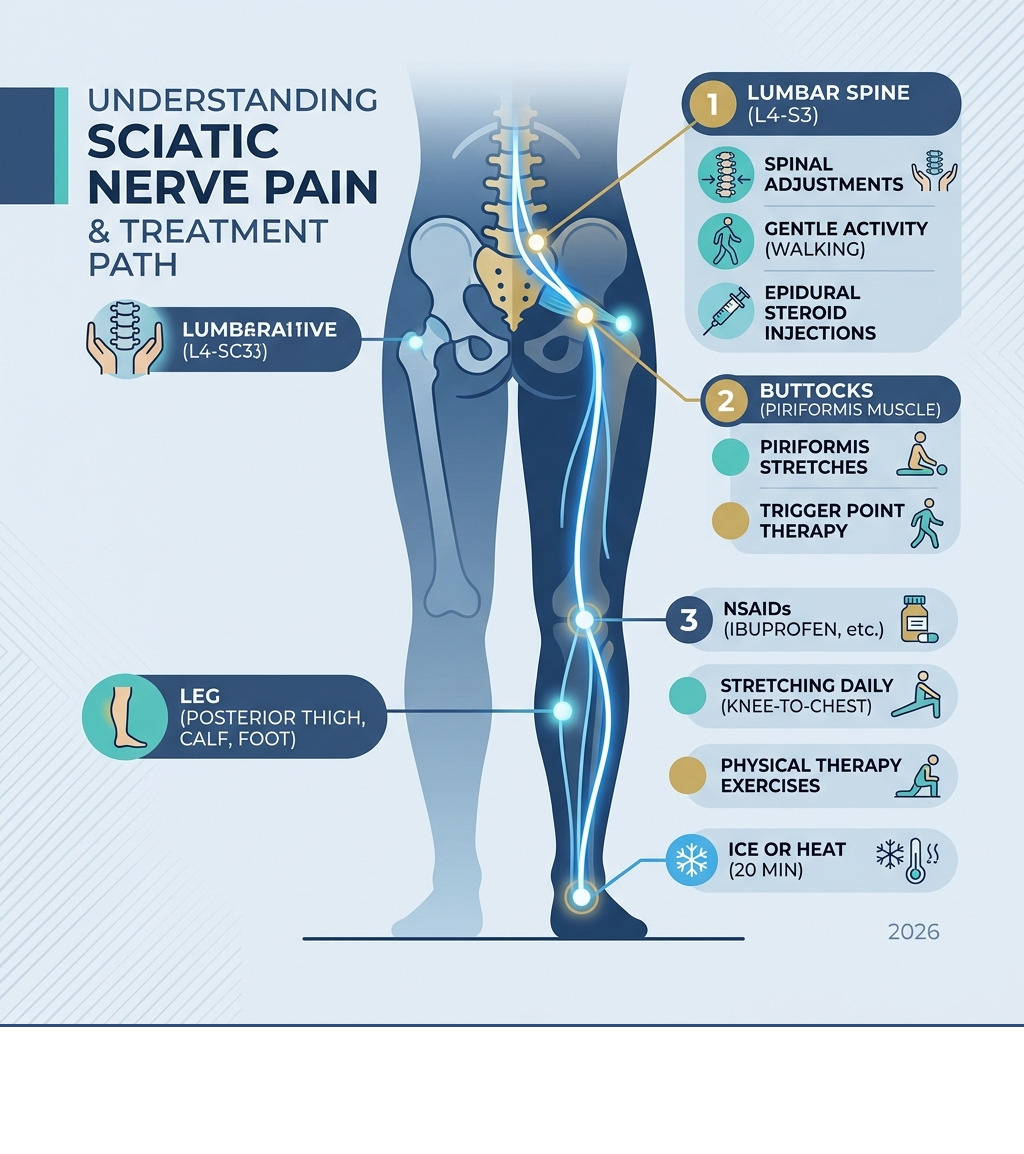
- Apply ice or heat – Ice for the first 48-72 hours, then switch to heat (20 minutes at a time)
- Stay gently active – Short walks reduce inflammation better than bed rest
- Stretch daily – Knee-to-chest, cat-cow, and piriformis stretches relieve nerve pressure
- See a chiropractor or physical therapist – Spinal adjustments and targeted exercises address the cause
- Ask about injections – Epidural steroid injections help when other options fall short
- Consider surgery only if needed – Reserved for severe cases that don’t respond to conservative care
Nearly 90% of people with sciatica improve without surgery. Most cases resolve within four to six weeks.
That sharp, shooting pain running from your lower back through your buttocks and down your leg is one of the most disruptive things a busy person can experience. Whether you first noticed it sitting at a desk, walking, or getting out of your car after a long commute in Tampa, sciatica has a way of stopping you in your tracks.
The sciatic nerve is the longest nerve in the human body, roughly the width of a penny at its widest point. It runs from your lower spine, through your hips and buttocks, and all the way down each leg to your toes. When something compresses or irritates it — a herniated disc, a bone spur, tight muscles — the result is sciatica, also known as lumbar radiculopathy.
Up to 40% of adults will deal with sciatica at some point in their lives. Yet most people don’t know where to start when it comes to getting relief.
I’m Vasilios Nenos, founder of MAST Health and a licensed chiropractic physician with advanced training in clinical neurology, and I’ve worked with many Tampa patients to develop personalized sciatic nerve pain treatment plans that go beyond temporary fixes. In the sections below, I’ll walk you through everything you need to know — from understanding what’s causing your pain to the most effective treatments available right now in 2026.
Understanding Sciatica: Causes and Symptoms in Tampa
In our Tampa clinics, we often see patients who describe their pain as a “lightning bolt” or a “hot poker” traveling down the back of their leg. This is the classic presentation of sciatica. While it feels like a leg problem, the source is almost always in the lower back (the lumbar spine).
Common Causes of Nerve Compression
Several conditions can lead to the need for sciatic nerve pain treatment:
- Herniated Discs: This is the most frequent culprit. When the soft, jelly-like center of a spinal disc pushes through a tear in the tougher exterior, it can press directly on the nerve roots.
- Spinal Stenosis: As we age, the spinal canal can narrow, putting pressure on the nerves.
- Bone Spurs: Overgrowth of bone, often caused by osteoarthritis, can pinch the nerve.
- Piriformis Syndrome: In some people, the piriformis muscle in the buttock can spasm and compress the sciatic nerve.
Recognizing the Symptoms
Sciatica usually affects only one side of the body. You might experience:
- Radiating Pain: Pain that starts in the low back and travels through the buttock, down the back of the thigh, and into the calf or foot.
- Numbness and Tingling: That “pins and needles” sensation or a loss of feeling in parts of the leg.
- Muscle Weakness: Difficulty moving your foot or leg, or feeling like your leg might “give out.”
- Worsening Triggers: Pain that intensifies when you sit for long periods, cough, or sneeze.
Living in Tampa, we also have to consider how our environment affects us. High humidity levels can sometimes exacerbate joint inflammation, making those with underlying spinal issues feel more stiff and symptomatic. Furthermore, we see a high volume of cases related to Auto Accident Injury Rehabilitation, where the sudden impact of a collision shifts the spine or causes immediate disc herniations.
Effective Non-Surgical Sciatic Nerve Pain Treatment Options
The good news is that nearly 90% of patients find relief through non-surgical means. At MAST Health, we focus on a “whole-body” approach to get you back to your routine, whether that’s golfing or shopping in Tampa.

The Power of Integrated Care
We believe that combining different therapies offers the best chance for long-term recovery.
- Chiropractic Adjustments: By realigning the spine, we can reduce the mechanical pressure on the sciatic nerve. These gentle, precise movements help restore mobility and allow the body to heal naturally.
- Physiotherapy Corrective Exercise: Strengthening the “core” muscles—the natural corset of your body—helps stabilize the spine and prevents future flare-ups.
Medication and Injections
For many, first-line medications provide the breathing room needed to start physical rehab.
- Gabapentin: This is often more effective than standard painkillers for true nerve pain, as it specifically targets the way nerves send signals.
- Epidural Steroid Injections: If oral medications aren’t enough, a specialist might inject corticosteroids directly near the irritated nerve root to provide up to three months of relief.
| Feature | Physical Therapy | Chiropractic Care |
|---|---|---|
| Primary Focus | Strengthening & Flexibility | Spinal Alignment & Nerve Function |
| Method | Corrective Exercises | Manual Adjustments |
| Goal | Long-term Stability | Root-Cause Pressure Relief |
| Success Rate | High (Combined with other care) | High (90% non-surgical success) |
Specialized Sciatic Nerve Pain Treatment for Athletes
Tampa is a sports-heavy city. Whether you’re a weekend warrior playing pickleball in Tampa or a competitive athlete, sciatica can bench you quickly. Chiropractor in Tampa for Sports Injuries How Athletes Stay in the Game explores how we use core stabilization and performance recovery to keep you moving. We often look at the same protocols used for professional athletes in Tampa to ensure our local patients receive elite-level care.
Advanced Sciatic Nerve Pain Treatment for Auto Injuries
If your sciatica started after a car crash, time is of the essence. Under Florida law, you must be medically evaluated within 14 days to remain eligible for PIP (Personal Injury Protection) benefits. Often, whiplash or hidden nerve compression doesn’t show symptoms for a few days. We offer same-day evaluations in our Tampa locations to document your injuries and start integrated pain management immediately.
At-Home Self-Care and Lifestyle Changes for Long-Term Relief
While professional care is vital, what you do at home in Tampa matters just as much.
- Alternating Heat and Ice: Use ice packs for the first 48 to 72 hours to bring down swelling. After that, switch to a heating pad on a low setting to relax tight muscles. Limit each session to 20 minutes.
- Ergonomic Setup: For our remote workers in Tampa, ensure your computer monitor is at eye level and your chair provides lumbar support. Avoid “the couch office,” which is a recipe for disc trouble.
- Stay Active: It sounds counterintuitive, but walking in Tampa is often better than lying in bed. Movement keeps the blood flowing and reduces inflammation.
- Targeted Exercises:
- Cat-Cow: On all fours, alternate between arching your back like a cat and letting it sink while looking up.
- Bird-Dog: Extend one arm and the opposite leg while on all fours to build core stability.
- Pelvic Tilts: Lie on your back and gently flatten your spine against the floor.
- Lifestyle Shifts: Smoking cessation is crucial—tobacco use restricts blood flow to the spinal discs, accelerating degeneration. Additionally, maintaining a healthy weight reduces the constant “load” on your lumbar spine.
This is not medical advice. Before starting any home exercise routine, it’s crucial to consult with a physician.
When to Seek Professional Care and Surgical Options
Most cases of sciatica resolve with conservative care, but you should know What to Expect on Your First Visit to Mast Health Chiropractic so you don’t delay treatment.
How We Diagnose Sciatica
During your exam, we use specific maneuvers like the Straight Leg Raise test. If lifting your leg while lying down causes shooting pain, it’s a strong indicator of nerve root irritation. If symptoms are severe or persistent, we may order:
- MRI or CT Scans: To see detailed images of herniated discs or bone spurs.
- Electromyography (EMG): This measures how well electrical signals move through the nerve to confirm the severity of the damage.
When Surgery is Necessary
Surgery is typically the last resort, reserved for cases where conservative sciatic nerve pain treatment has failed after 6-12 weeks, or when nerve damage is progressing.
- Microdiscectomy: Removing the part of the disc that is pressing on the nerve.
- Laminectomy: Removing the back part of a vertebra to create more space for the nerves.
- Spinal Fusion: Permanently connecting two or more vertebrae to stabilize the spine.
Red Flags: Seek Immediate Care Go to an emergency room in Tampa if you experience:
- Sudden, severe weakness in both legs.
- Bowel or bladder dysfunction (inability to go or inability to hold it).
- Saddle Anesthesia: Numbness in the areas that would touch a saddle (genitals, buttocks, inner thighs). These can be signs of Cauda Equina Syndrome, a surgical emergency.
Frequently Asked Questions about Sciatic Nerve Pain Treatment
How long does sciatica typically last?
For most people, the acute phase of sciatica lasts about four to six weeks. With proper rest and gentle movement, many find they are back to normal within this timeframe. However, up to one-third of people may experience persistent discomfort a year later if the underlying cause isn’t addressed. In 2026, we are seeing better recovery rates than ever thanks to integrated chiropractic and physiotherapy protocols.
Are there any treatments I should avoid for sciatica?
Yes. While popular, some treatments have little evidence of effectiveness for sciatica. Clinical guidelines often recommend against routine use of TENS units or spinal traction for acute sciatica. Furthermore, we strongly advise against relying on opioids, which carry high risks of addiction and don’t treat the mechanical cause of the pain. Prolonged bed rest (more than 48 hours) should also be avoided, as it can weaken the supporting muscles and make the pain last longer.
Can pregnancy cause sciatic nerve pain?
Absolutely. It’s very common in the second and third trimesters. Hormonal changes cause ligaments to loosen, and the growing baby can put direct pressure on the nerve. We focus on gentle pelvic tilts and prenatal-safe stretches to help Tampa moms-to-be find relief. The good news is that pregnancy-related sciatica usually resolves shortly after birth.
Conclusion
At MAST Health, we don’t just want to mask your symptoms; we want to solve the problem. Our root-cause approach looks at your entire lifestyle—from how you sit at your office to how you recover after a workout in Tampa. We are proud to serve the Tampa community with weekend and same-day availability because we know that nerve pain doesn’t wait for a convenient time.
If you’re tired of “living with it” and are ready for a personalized sciatic nerve pain treatment plan, we are here to help. Explore Our Services and let us help you get back to the life you love in Tampa.