What Is Corrective Care After an Auto Wreck — and Why It Matters
Corrective care auto wreck treatment is a specialized chiropractic approach that goes beyond temporary pain relief — it addresses the structural damage to your spine and soft tissues caused by a collision, helping you heal fully rather than just feel better short-term.
Quick answer:
- Corrective care after an auto wreck restores proper spinal alignment and soft tissue function
- It targets root causes like ligament damage and spinal misalignment — not just symptoms
- You should seek evaluation within 24–72 hours of any collision, even if you feel fine
- Delayed treatment is one of the leading reasons accident victims develop chronic pain years later
- No referral is required in Florida — you can seek care directly after an accident
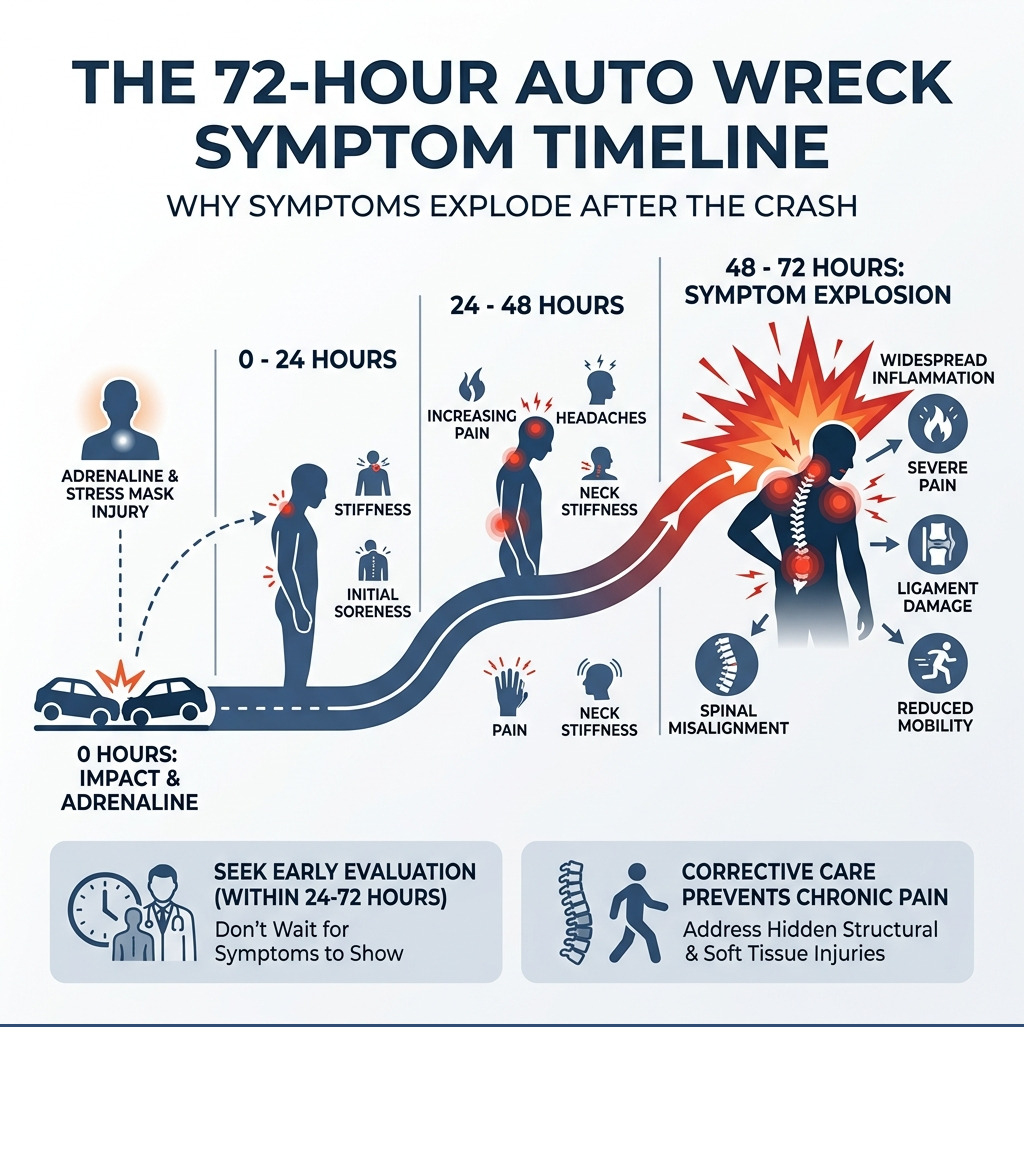
Tampa’s busy roads — from the congestion near the Howard Frankland Bridge to the daily grind on I-275 — make auto accidents a very real risk for working professionals in this city. What many people don’t realize is that the adrenaline rush right after a crash can completely mask serious injuries. Soft tissue damage, spinal misalignments, and ligament injuries often stay hidden for 48–72 hours before symptoms hit hard.
By then, inflammation has set in — and if left untreated, what started as a minor fender-bender can quietly become a source of chronic pain that lasts for years.
Research consistently shows that many accident victims who settle their insurance claims still suffer from pain long afterward — often because they received treatment too late or stopped too early.
I’m Vasilios Nenos, a licensed chiropractic physician and founder of MAST Health in Tampa, with advanced training in clinical neurology and hands-on experience treating corrective care auto wreck cases. In this guide, I’ll walk you through exactly how corrective care works and how to use it to protect your long-term health after a collision.
Understanding Corrective Care for Auto Wreck Injuries
When we talk about corrective care auto wreck recovery, we are looking far beyond the immediate “ouch” factor. Most traditional medical approaches to car accidents involve “symptom masking”—using muscle relaxers or anti-inflammatories to dull the pain until the body supposedly heals itself. However, an auto accident is a high-force mechanical event. Your spine and its supporting ligaments don’t just “bounce back” to their original structural integrity without help.
Corrective care focuses on the root cause. If your car’s frame is bent in a collision near the Howard Frankland Bridge, you don’t just spray-paint the scratches and call it a day; you straighten the frame. Your body is the same. We look at the biomechanics of your spine to ensure that every vertebra is moving correctly and that the natural curves of your neck and back are preserved.
Before deciding on a path, many patients ask, Should I See a Chiropractor After a Car Accident? The answer lies in the difference between feeling okay and actually being structurally sound.
| Feature | Traditional Symptom Masking | Corrective Structural Care |
|---|---|---|
| Primary Goal | Temporary pain reduction | Long-term structural stability |
| Method | Medication / Cortisone | Spinal remodeling / Adjustments |
| Focus | Where it hurts (Symptoms) | Why it hurts (Root Cause) |
| Outcome | Often leads to chronic relapse | Functional restoration and prevention |
How Corrective Care for Auto Wrecks Differs from Traditional Treatment
The biggest differentiator in corrective care is the focus on long-term stability. In a typical Tampa fender-bender, the sudden “whip” of the head can tear or overstretch the ligaments that hold your spine together. Traditional treatments often ignore this ligament damage because it doesn’t show up on a standard ER X-ray.
Corrective care addresses the neurological interference caused by these misalignments. When your spine is out of place, it puts pressure on the nerves, leading to everything from headaches to digestive issues. By focusing on functional restoration, we ensure that your body isn’t just “patching” the injury with weak scar tissue, but actually rebuilding its structural foundation.
Common Injuries and the Science of Structural Damage
The physics of a car wreck are brutal. Whether you are rear-ended while stopped in traffic on Dale Mabry Hwy or clipped during your Bayshore Boulevard commute, your body undergoes rapid acceleration and deceleration. This creates a “ricochet” effect between the seatbelt and the seat.
Common injuries we see include:
- Whiplash: The head is thrown forward and backward, damaging the delicate cervical spine.
- Herniated Discs: The force of the impact can cause the soft centers of spinal discs to push through the tougher exterior, pinching nerves.
- Spinal Misalignments (Subluxations): Vertebrae are forced out of their natural position, disrupting the nervous system.
At MAST Health, we use Auto Accident Injury Rehabilitation to specifically target these issues. We don’t guess; we test. This often involves advanced diagnostics to see exactly how your structure has changed.
Identifying Symptoms Requiring Corrective Care After an Auto Wreck
Symptoms of a corrective care auto wreck injury don’t always scream at you immediately. In fact, soft tissue damage often “hides” for 48 to 72 hours. You might leave the scene of the accident feeling “fine” only to wake up three days later unable to turn your head.
Watch for these red flags:
- Neck Stiffness: A sign that the muscles are guarding a structural injury.
- Radiating Pain: Tingling or sharp pain traveling down the arms or legs, often indicating a disc issue.
- Chronic Headaches: Frequently caused by misalignments in the upper neck (the “atlas” and “axis” vertebrae).
- Numbness in Extremities: A clear sign of nerve impingement that requires immediate evaluation.
The Corrective Care Process: From Assessment to Alignment
Recovery in the Tampa Bay area requires a personalized plan. No two accidents are the same, and no two spines react to trauma in the same way. Whether you are recovering in South Tampa or near Ybor City, our process starts with a comprehensive assessment.
We combine spinal remodeling traction with precise adjustments to “retrain” the spine. This isn’t just a quick “pop” and you’re out the door. It involves Physiotherapy & Corrective Exercise to strengthen the muscles that support your newly aligned spine.
Advanced Diagnostics for Corrective Care After an Auto Wreck
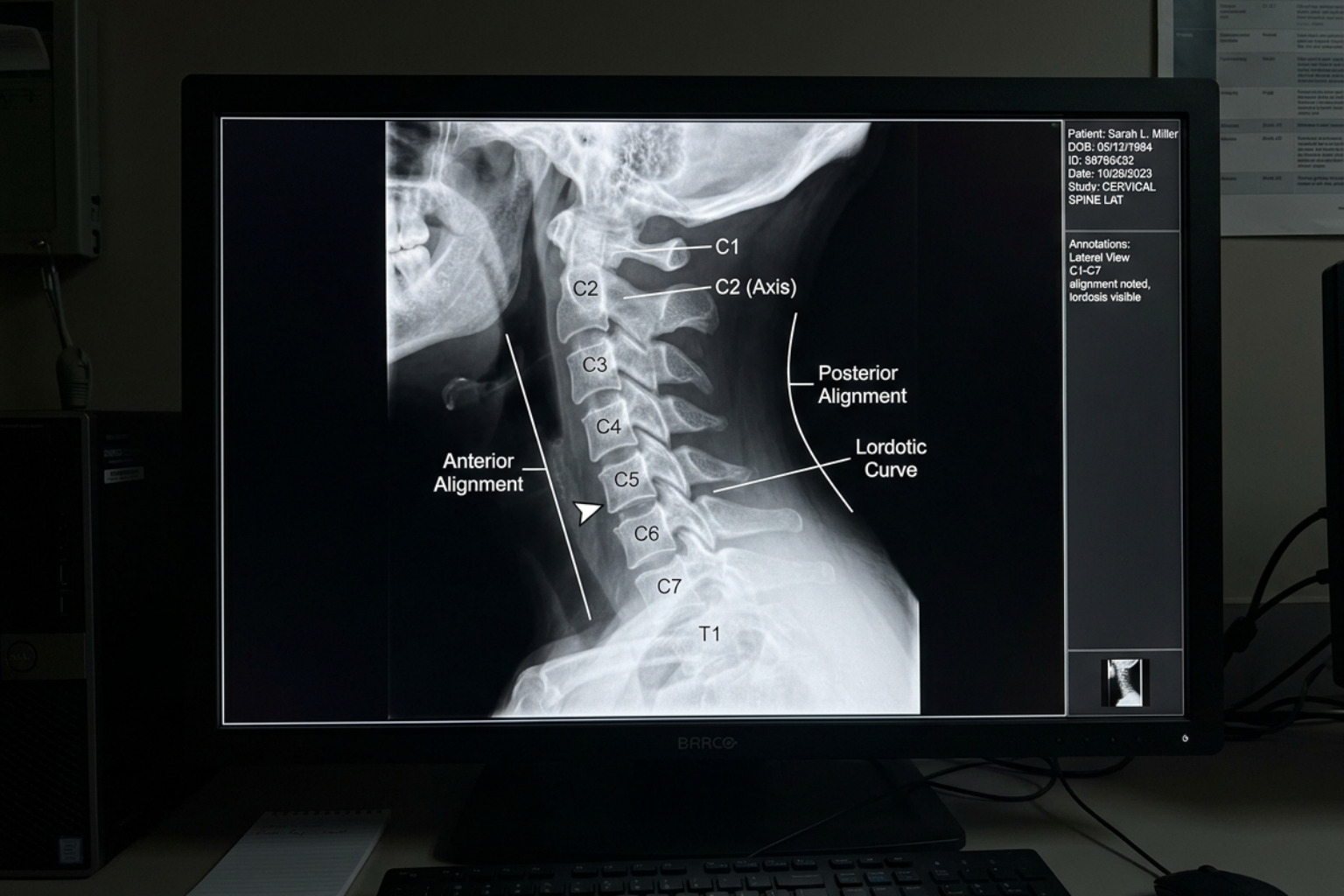
To achieve true corrective care auto wreck results, we rely on objective data. We use digital radiographic structural analysis to measure the exact degrees of displacement in your spine.
In Tampa, we hold ourselves to high diagnostic standards. By using precision measurements, we can see exactly where the ligament laxity is occurring and how much “structural shift” has happened. This allows us to provide a roadmap for your recovery that is based on science, not just how you feel on a particular Tuesday.
Navigating the Recovery Journey in Tampa
One of the most stressful parts of an auto wreck—besides the physical pain—is dealing with the aftermath. Between insurance adjusters and potential legal claims, it can feel like a second full-time job.
We understand the Florida “No-Fault” system and Personal Injury Protection (PIP). We work closely with insurance companies and, when necessary, provide detailed documentation for attorneys to ensure your medical records accurately reflect the structural damage you’ve sustained.
You can see a full list of how we help on Our Services page. Here are the essential steps you should take post-accident:
- Seek Evaluation within 72 Hours: To qualify for full PIP benefits and catch hidden injuries.
- Document Everything: Keep track of symptoms, even minor ones like “brain fog” or dizziness.
- Stay Consistent: Corrective care is a process. Skipping appointments allows the spine to settle back into its injured position.
- Follow Home Care Instructions: The stretches and exercises we provide are vital for stabilizing your progress.
Avoiding Surgery and Long-Term Complications
The ultimate goal of corrective care auto wreck treatment is to keep you out of the operating room. Surgery is invasive and often comes with a long, painful recovery. By restoring natural alignment and promoting disc healing through non-invasive techniques, we can often resolve even severe issues like herniated discs without a scalpel.
Drug-free healing is also a major benefit. By addressing the root cause, we help patients avoid a long-term reliance on pain medications, which only hide the problem while the underlying structural damage gets worse.
Frequently Asked Questions about Corrective Care
How soon after a Tampa car accident should I seek evaluation?
You should be evaluated within 24–72 hours. While you might feel fine initially due to the “adrenaline mask,” inflammation and misalignment symptoms often explode after the 3-day mark. Early intervention is the key to preventing chronic issues.
Can corrective care help me avoid surgery?
Yes. By focusing on structural restoration and disc healing, we address the mechanical problems that usually lead to surgery. Restoring natural alignment allows the body to heal itself, often making invasive alternatives unnecessary.
Do I need a referral to see an auto injury specialist in Florida?
No. In Florida, you have direct access to chiropractic care. You do not need a referral from a primary care doctor to begin your corrective care auto wreck recovery. You can come straight to us to start your specialist evaluation.
Conclusion
At MAST Health, we are proud to serve the Tampa Bay community, from the professionals in Carrollwood to the families in South Tampa. We don’t just treat symptoms; we focus on root-cause wellness to ensure you can return to enjoying everything our city has to offer—whether that’s a walk along the Riverwalk or a Saturday at Raymond James Stadium.
If you’ve been in a wreck, don’t wait for the pain to become permanent. Learn What to Expect on Your First Visit to Mast Health Chiropractic and let us help you get back on the road to health.