Chiropractic care, including techniques like Flexion-Distraction and Gonstead adjustments, takes pressure off the compressed nerves that herniated discs create, easing pain, tingling, and muscle weakness in the neck, arms, lower back, or legs. We pair a thorough spinal evaluation with targeted exercises and ongoing progress tracking, so disc-related nerve pain gets treated through a conservative, non-surgical plan built around you.
Key Takeaways
- Chiropractic care addresses herniated discs through spinal manipulation, targeted exercises, and non-invasive therapies.
- Dr. Nenos, one of fewer than 1,000 board-certified chiropractic neurologists nationwide, personally evaluates every patient.
- Mast Health combines standard chiropractic adjustments with neurological rehabilitation and corrective exercise under one roof.
- Individualized care plans built per condition, not packaged protocols, ensure treatment matches your specific herniated disc needs.
What Is a Herniated Disc, Exactly?
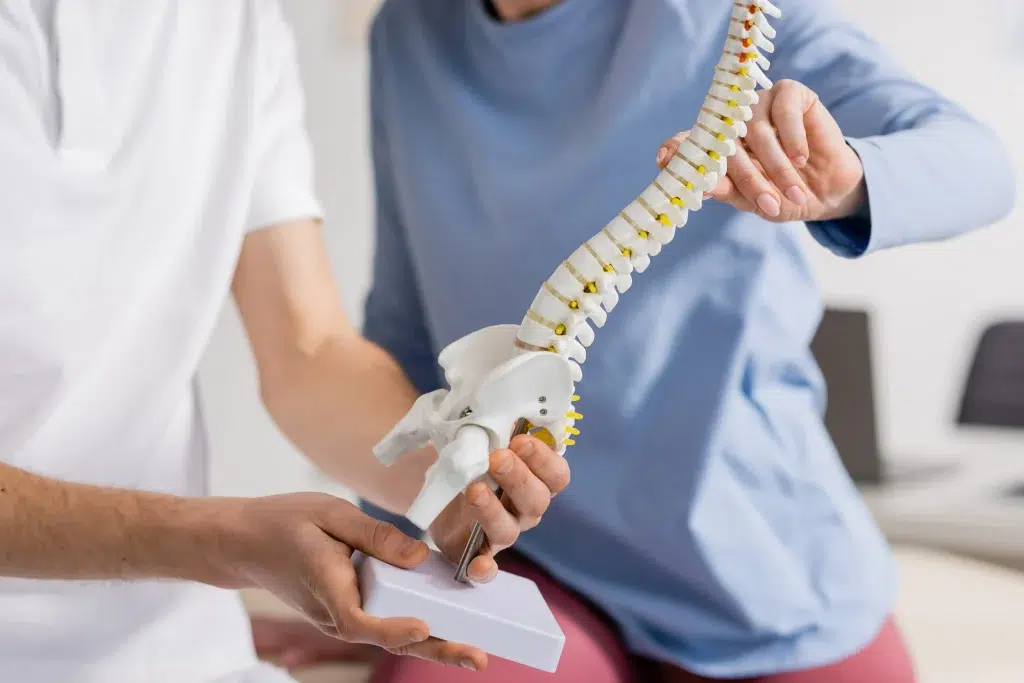
A herniated disc happens when the soft, gel-like center of a spinal disc pushes through its tougher outer layer. That displaced material presses on nearby nerves, and the result is pain, tingling, or muscle weakness. Patients often ask us about this same condition under different names, ruptured disc, slipped disc, but they all describe the same mechanical problem: a disc that’s lost its ability to cushion the spine the way it should.
It rarely feels dramatic at first. Discomfort usually starts small, a dull ache or occasional stiffness, then spreads well beyond where it began. We regularly see patients whose pain travels from the lower back into the hip, glute, or leg, or from the neck down into the arm. That spreading pattern is one of the clearest signs that a nerve, not just a muscle, is involved.
What Causes a Herniated Disc?
Car accidents account for a large share of the herniated discs we see. A sudden impact forces the spine into compression it was never built for. But trauma isn’t the only path to a herniation. Repetitive stress, years of poor posture, the natural aging of disc material, and a sudden awkward strain can all wear down the disc’s outer layer over time.
Does a Herniated Disc Always Cause Pain?
Not every herniation announces itself right away. Some discs bulge without ever touching a nerve, staying quiet until more strain or movement shifts the material. Once nerve compression sets in, though, symptoms tend to escalate, from mild irritation to the radiating pain and weakness patients describe most often.
How Does a Herniated Disc Cause Pain?
Nerve compression is behind most of the pain that comes with a herniated disc. When the soft inner material pushes against nearby nerve tissue, the result can be sharp, severe pain rather than mild discomfort. We see this often in patients who describe their symptoms as sudden and disabling, not something that crept up on them.
This compression usually traces back to a specific moment of trauma. A sudden injury, whiplash from a rear-end collision, for example, can create small cracks in the disc’s tough outer layer. Those cracks weaken the structure over time, even when pain doesn’t show up right away. That’s one reason disc-related nerve pain can surface weeks after an accident instead of immediately.
Why does whiplash matter for disc health?
Whiplash puts the neck and spine through rapid force the disc’s outer layer was never built to absorb. The small cracks that form can widen under repeated stress, eventually letting the disc’s inner material migrate outward. We see this progression as one of the most overlooked consequences of a collision injury.
Can recovery timing affect outcomes?
Recovering from a collision calls for a provider who understands post-traumatic spinal injury specifically, not general wellness adjustments. The two aren’t interchangeable. Florida’s Personal Injury Protection law also narrows the window for seeking treatment to just 14 days from the date of injury, so early evaluation isn’t optional, it’s critical.
| Pain Driver | What Happens |
| Nerve compression | Herniated material presses on nerve tissue, causing sharp pain |
| Structural weakening | Whiplash creates small cracks in the disc’s outer layer |
| Treatment delay | Missed PIP window complicates documentation and care |
Is Chiropractic Good for Herniated Discs?
Chiropractors can often diagnose and treat herniated discs through spinal manipulation, targeted exercises, and non-invasive therapies. For patients dealing with nerve pain, tingling, or muscle weakness from a bulging or ruptured disc, the question of whether chiropractic is good for herniated discs usually comes down to one thing: does the approach get at the real cause of nerve compression, or just cover up the pain.
Our answer centers on drug-free, non-invasive treatment aimed at the root cause of disc-related pain, not just the symptoms sitting on top of it. Masking pain with medication can feel like progress, but the underlying pressure on the nerve root stays untouched, and symptoms tend to come back. A thorough evaluation, one that pinpoints exactly which disc level is involved and how it’s affecting nearby nerves, is what separates lasting relief from a quick fix.
No two herniated discs behave the same way, so effective care has to be built around the individual, not a packaged protocol handed to everyone. Continuity matters here too. Having one qualified provider evaluate every visit, instead of rotating between different staff, makes it far easier to track how a disc injury is actually responding over time.
Can Chiropractic Adjustments Make a Herniated Disc Worse?
Adjustments performed without a clear diagnosis carry real risk, which is why imaging and a neurological exam typically come before any hands-on treatment. Once a provider understands exactly where the herniation sits and how it’s interacting with the spinal nerves, manipulation can be applied safely and precisely. Skip that evaluation step, and that’s where problems happen.
What Does Non-Surgical Disc Care Usually Involve?
- Spinal manipulation aimed at reducing nerve pressure
- Targeted corrective exercises to support spinal stability
- Non-invasive therapies layered into a step-by-step plan
- Ongoing reassessment as the disc responds to care
Which Chiropractic Techniques Treat Disc Injuries?
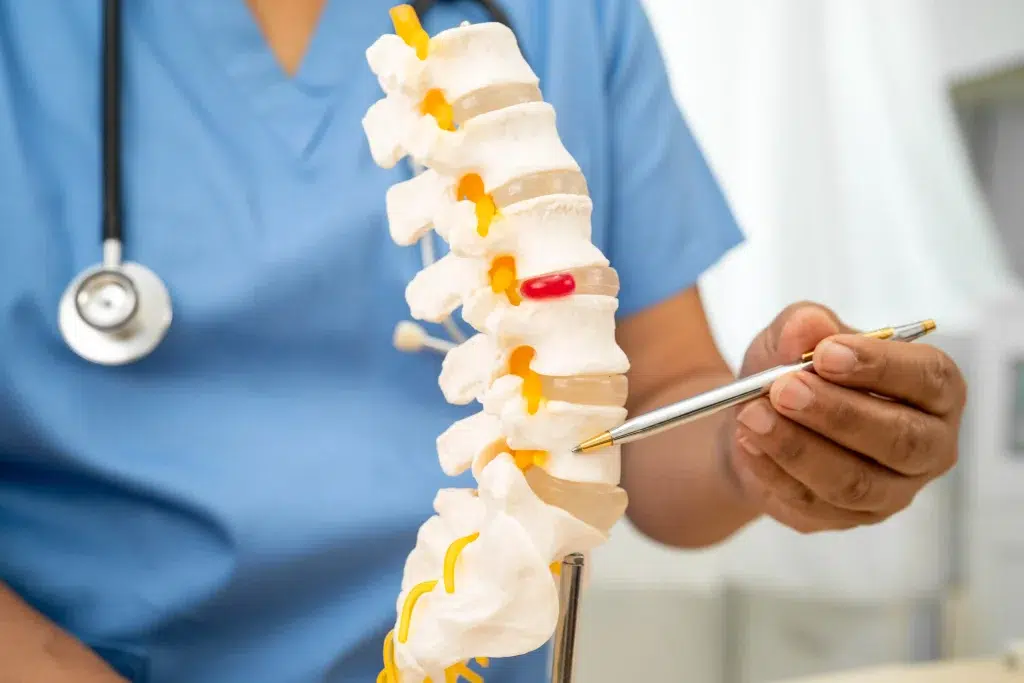
We rely on four distinct techniques for disc injuries, each matched to a specific part of the problem. Gonstead analysis pinpoints precise spinal misalignment before any adjustment happens, giving us a clear map of where the disc is under stress. Flexion-Distraction comes next for disc injuries specifically, creating gentle separation between vertebrae instead of applying direct force to the herniated area. That distinction matters enormously for anyone wondering whether is chiropractic good for herniated discs: it’s technique selection, not force, that determines whether care helps or aggravates the injury.
Soft tissue damage often comes along with disc injuries, so we address that layer separately. Instrument-assisted protocols target the surrounding muscles and ligaments that tighten up to guard an injured disc. Treat only the disc and ignore that guarded, inflamed soft tissue, and part of the pain cycle stays untouched.
What other adjustment methods support disc recovery?
Beyond Gonstead and Flexion-Distraction, we also draw on Diversified, SOT, and Thompson Drop Table techniques as needed. Each offers a different mechanical approach to the spine, and we choose based on the patient’s specific disc presentation, body type, and comfort level. No single method fits every case.
| Technique | Primary Role |
| Gonstead analysis | Precise detection of misalignment |
| Flexion-Distraction | Gentle separation for disc injuries |
| Instrument-assisted care | Soft tissue and muscle guarding |
| Diversified, SOT, Thompson Drop Table | Matched to individual disc presentation |
Matching the technique to the presentation, instead of applying one method across the board, is the foundation of safe, effective disc care.
Should You Adjust a Severely Herniated Disc?
Severe disc herniations call for individual judgment, not a blanket yes or no. Not every disc injury responds the same way to manipulation, and treating two patients identically can produce very different outcomes. We approach this carefully, because spinal manipulation carries real risk, and that risk means not every herniated disc should be adjusted with the same technique or force.
A disc injury that looks similar on paper can behave very differently depending on the surrounding musculature. An adjustment may not hold if the core and stabilizing muscles around the spine aren’t pulling their weight. When that happens, the vertebrae simply drift back toward where they started, often within hours or days, leaving the patient frustrated and no better off.
How Do We Decide Whether Manipulation Is Safe for a Specific Disc?
We don’t rely on guesswork or a one-size-fits-all protocol. A personal evaluation at every single visit, performed by a board-certified provider, lets us judge whether manipulation is right for that specific injury on that specific day. This matters most with severe herniations, where nerve compression and muscle guarding can shift from week to week.
Before recommending chiropractic care for a herniated disc, we weigh several factors:
- Direction and severity of the disc bulge or rupture
- Presence of nerve compression symptoms like numbness or weakness
- Muscle stabilization and core support around the spine
- Response to prior conservative care, if any
What If Standard Treatment Hasn’t Worked?
Chiropractic neurology comes into play when chronic neurological pain or symptoms resist conventional approaches. For stubborn, complex disc cases that haven’t responded to standard methods, this specialty gives us a more targeted neurological lens on the problem.
What Happens During a Chiropractic Evaluation?
A chiropractic evaluation starts with a conversation, then moves into hands-on testing of movement, nerve function, and spinal alignment. We start by asking when the symptoms began, what makes them worse, and whether pain travels into an arm or leg, a pattern that often points to nerve involvement. From there, we check posture, range of motion, and reflexes to build a clear picture before any treatment begins.
Timing matters with disc pain, flare-ups rarely wait for a convenient opening. We offer same-day appointments and weekend availability so patients can get evaluated quickly instead of riding out days of worsening discomfort. Waiting through a flare without guidance usually means more guarding, more muscle tension, and a harder recovery later.
Access matters just as much as speed. Evaluation stays open to patients regardless of insurance status, a lack of coverage should never delay that first visit. We also accept walk-ins for accident-related injuries, so a disc problem following a car collision gets assessed without the added stress of scheduling delays.
What does the doctor look for during the exam?
We look for specific signs: diminished reflexes, weakness in particular muscle groups, numbness patterns, and restricted movement at certain spinal segments. Is chiropractic good for herniated discs really comes down to identifying these details correctly before any hands-on care starts.
Does every patient get the same treatment plan?
No. Every plan is built around the patient’s specific condition and daily routine, not a one-size-fits-all script. A desk worker with leg numbness and an athlete with low-back stiffness need very different approaches, even if their imaging looks similar.
How Does Chiropractic Compare to Degenerative Spine Care?
Degenerative spine conditions and sudden disc herniations aren’t the same problem, and we treat them differently from the start. Degenerative changes build slowly, often from repetitive stress, poor posture, or ordinary aging, rather than one traumatic event. A herniation, by contrast, usually signals an acute tear in the disc’s outer layer. Telling the two apart shapes every decision that follows.
That distinction matters more than many patients realize. A spine weakened by an old injury, whiplash from a car accident years earlier, say, can develop small cracks in its outer fibrous layer long before any pain shows up. Those cracks sit quietly until everyday strain, a heavy lift, a long drive, a bad night’s sleep, finally pushes them past their limit. We look for that history during evaluation, because a spine with old microdamage responds differently to load than a healthy one.
Can adjustments alone fix a degenerative spine?
Adjustment alone rarely resolves a long-standing degenerative pattern. We combine standard chiropractic adjustment with neurological rehabilitation and corrective exercise, addressing both the joint restriction and the nerve signaling and muscular support around it. Degenerative cases usually need that broader strategy, not one technique applied over and over.
Does training background affect treatment quality?
Academic grounding shows up in clinical decisions. We bring the same rigor to degenerative and traumatic spine cases that goes into training future chiropractors at the graduate level.
| Spine Condition | Typical Onset | Our Approach |
| Degenerative disc changes | Gradual, years | Adjustment plus corrective exercise and rehab |
| Traumatic herniation | Sudden, single event | Targeted adjustment and nerve-focused care |
When Should You Seek Care Beyond Chiropractic?
Certain warning signs call for evaluation beyond spinal adjustments alone. Numbness that spreads, muscle weakness that worsens, or tingling that won’t resolve all point to nerve compression that deserves closer attention, not something to wait out. These symptoms matter because they signal the disc material is pressing on a nerve root, and waiting too long risks lasting nerve damage.
Conventional treatment doesn’t always resolve every case, and that gap is exactly where chiropractic neurology comes in. Vertigo, post-concussion symptoms, balance problems, or chronic neurological pain that hasn’t improved with standard care often point to a deeper neurological component tied to the spine. Patients asking whether chiropractic care works well for herniated discs should know that a thorough neurological exam, not just a spinal adjustment, is sometimes the missing piece.
How common are spine-related nerve symptoms?
Spinal issues are far more widespread than most patients realize. Nine out of ten Americans report headaches, and many of those trace back to spinal misalignment rather than an isolated headache disorder. That overlap is exactly why nerve-related symptoms deserve the same scrutiny as back and leg pain.
What if new symptoms appear after a car accident?
A new tingling sensation or shooting leg pain following a collision should never be written off as ordinary soreness. Walk-in access for auto accident patients means you can get evaluated the same day a symptom appears, instead of waiting through a scheduling backlog while nerve irritation continues.
Red flags that warrant prompt evaluation include:
- Numbness or tingling spreading down an arm or leg
- Muscle weakness affecting grip or walking
- Pain following a car accident, fall, or sports injury
- Symptoms that worsen despite several weeks of care
FAQ
Is chiropractic good for herniated discs?
Yes. Techniques like Flexion-Distraction and Gonstead adjustments take pressure off compressed nerves, easing pain, tingling, and muscle weakness in the neck, arms, lower back, or legs.
What causes a herniated disc?
Car accidents, repetitive stress, poor posture, the natural aging of disc material, and a sudden awkward strain can all weaken the disc’s outer layer, letting the inner material push through.
Who treats herniated disc patients at Mast Health?
Dr. Nenos, a board-certified chiropractic neurologist, personally evaluates every patient and builds individualized care plans that combine chiropractic adjustments, neurological rehabilitation, and corrective exercise.
Conclusion
Chiropractic care, when delivered by a qualified specialist, addresses herniated discs through targeted adjustments, neurological assessment, and corrective rehabilitation that work together to restore function and reduce pain. What makes the difference is a thorough evaluation and a treatment plan built around your specific condition, not a generic protocol. If you’re dealing with disc-related symptoms, a comprehensive approach that combines spinal manipulation with neurology-informed techniques offers a real path toward recovery and long-term spinal health.